Remember those iconic characters that shaped our childhoods, from classic cartoons to epic video game heroes? It’s incredible to think how far we’ve come!

What used to take countless hours of meticulous hand-drawing has been utterly transformed by digital innovation, and let me tell you, it’s a wild ride.
I’ve personally witnessed how AI is sparking initial concepts and how stunning 3D modeling, photogrammetry, and immersive VR/AR are pushing creative boundaries like never before.
Character design isn’t just about drawing anymore; it’s about engineering emotion and telling diverse stories in ways we could only dream of a decade ago.
If you’re as excited as I am about where this future is headed, let’s explore it together! We’re about to uncover exactly how digital innovation is reshaping character design.
From Pencil Sketches to Pixel Perfect: The Dawn of Digital Character Creation
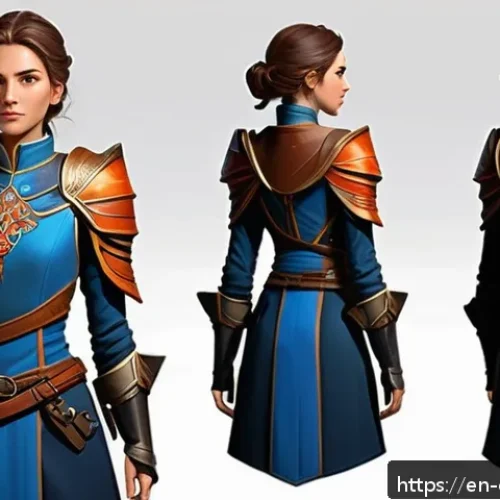
Remember those endless hours with a pencil and paper, trying to get that perfect curve or the right facial expression? It felt magical to finally see your character take shape, but the process was often painstakingly slow, especially when revisions piled up. Now, picture this: you have an idea, a fleeting thought of a character, and within minutes, you’re looking at dozens of stunning variations, each with its own unique flair. That’s the power of digital innovation in character design today, and honestly, it still blows my mind every single time. We’ve moved from a world where iteration was a luxury to one where it’s the standard, empowering artists like never before. I’ve seen firsthand how much faster the initial concepting phase has become, allowing for a creative exploration that was once impossible due to time constraints and budget.
AI as Your Co-Pilot: Revolutionizing Concept Art
When I first heard about AI assisting in concept art, I was a little skeptical, I’ll admit. Would it stifle creativity? Would everything start to look the same? But after diving in, my perspective totally flipped. Tools like Midjourney or Stable Diffusion aren’t about replacing the artist; they’re about giving us a supercharged sketchbook. You feed in a few descriptive words, a style you’re aiming for, and boom – you have a starting point, or ten, or a hundred. It’s like having an army of incredibly fast concept artists at your fingertips, ready to explore every wild idea you throw at them. I’ve personally used these to kickstart projects when I’m feeling a bit creatively drained, and it’s amazing how a few AI-generated images can spark an entirely new direction. It frees up mental space to focus on the truly unique elements and the storytelling, rather than getting bogged down in basic shape language or color palettes.
Iterate, Innovate, Integrate: Accelerating the Design Pipeline
The speed at which we can iterate now is just phenomenal. Back in the day, a major character revision could set a project back weeks. Today? We’re talking hours, maybe a couple of days for significant overhauls. This isn’t just about efficiency; it’s about pushing creative boundaries. When you can quickly test different outfits, hairstyles, body types, or even entire genre shifts for a character without fear of losing monumental work, you’re more likely to take risks, to experiment, and to stumble upon something truly groundbreaking. It integrates seamlessly into the workflow too, allowing for a fluidity that connects initial concept to final model with fewer bottlenecks. This agile approach means we can focus more on the nuance of character personality and emotional depth, ensuring that the visual design truly serves the narrative, rather than being a compromise forced by technical limitations.
Sculpting the Impossible: The Magic of Modern 3D Modeling
Oh, 3D modeling! If concept art is the spark, 3D modeling is where the character truly starts to breathe. The jump from 2D drawings to a fully volumetric, manipulable model used to be a monumental task, requiring insane precision and a deep understanding of complex software. But what we have now? It’s an absolute game-changer. I remember my early days struggling with polygon counts and tricky UV unwraps, feeling like I needed an engineering degree just to get a character to look decent. Fast forward to today, and the tools available are so intuitive, so powerful, that they truly feel like digital clay. You can sculpt, refine, and pose characters with a level of detail and control that was once reserved for high-budget studios. It’s not just about creating a static model; it’s about crafting a digital puppet ready for its stage.
Beyond the Basics: Mastering Mesh and Form
Software like ZBrush and Blender have genuinely democratized high-end 3D character creation. What once required specialized, expensive hardware and incredibly steep learning curves is now accessible to anyone with a decent computer and a passion for design. I’ve personally spent countless hours in ZBrush, feeling like a digital sculptor, pushing and pulling vertices to get that perfect anatomical detail or expressive feature. It’s less about the technical minutiae and more about the artistic vision now, allowing you to focus on the form and feeling of your character. The ability to dynamically subdivide meshes, sculpt with virtual brushes, and retopologize with smart tools means the technical barriers have largely melted away. You can go from a rough block-out to a highly detailed, production-ready model with an efficiency that still surprises me, every single time.
Painting with Pixels: Texturing and Shading for Reality
Once you’ve got that beautifully sculpted mesh, it’s time to give it skin, clothes, and all the intricate details that make it feel real. This is where texturing and shading come in, and boy, have these processes evolved! Tools like Adobe Substance Painter or Mari aren’t just about slapping an image onto a model; they allow you to paint directly onto your 3D canvas, complete with realistic material properties, wear and tear, and environmental effects. I love the feeling of adding a subtle scratch to a character’s armor, or the slight sheen of sweat on their skin – these tiny details create so much depth and personality. It’s an artistic process that allows for incredible realism, making characters feel tangible, like you could reach out and touch them. The layered approach to materials, physically based rendering (PBR) workflows, and smart material libraries have transformed what used to be a tedious task into a genuinely creative and satisfying part of the design process.
| Digital Innovation | Impact on Character Design | Key Benefits for Artists |
|---|---|---|
| AI-Powered Concept Art | Rapid generation of diverse visual ideas and styles. | Accelerated ideation, creative exploration, reduced initial time investment. |
| Advanced 3D Sculpting | Intuitive creation of detailed, high-fidelity models. | Artistic freedom, precise control over form, reduced technical barriers. |
| Photogrammetry | Capturing real-world objects/actors for realistic assets. | Hyper-realism, efficient creation of complex textures and models. |
| Motion Capture | Translating human performance directly to digital characters. | Lifelike animation, emotional authenticity, streamlined animation workflow. |
| Procedural Generation | Automated creation of variations for characters/accessories. | Scalability, unique customization options, efficiency for large-scale projects. |
Bringing Them to Life: Animation and Motion Capture Unleashed
Designing a character is one thing, but making them move, making them emote, making them *feel* alive? That’s where the true magic happens, and digital innovation has absolutely revolutionized this space. It used to be frame-by-frame, a grueling process that demanded incredible patience and technical skill. While those foundational skills are still vital, the tools we have now let us infuse characters with a level of natural movement and emotional nuance that would have been unimaginable just a couple of decades ago. Watching a character you’ve meticulously crafted finally walk, talk, and express itself is one of the most rewarding parts of this job, and the advancements in animation and motion capture have made that journey smoother and more expressive than ever before.
Capturing the Essence: The Power of Performance Data
Motion capture, or “mo-cap” as we call it, is truly mind-boggling when you think about it. It’s the closest we can get to simply *becoming* our characters. An actor performs, and specialized cameras and sensors record every subtle movement, every gesture, every tiny shift in weight. That data is then translated directly onto the digital skeleton of your character, instantly bringing them to life with authentic human motion. I’ve been on sets watching mo-cap performances, and the sheer fluidity and realism it adds are unparalleled. It’s not just about grand gestures; it’s about the small, unconscious movements that make a character feel truly human. This technology allows animators to focus on refining the emotional performance rather than painstakingly hand-keying every single joint rotation, saving immense time and delivering a superior, more believable result.
Procedural Animation: Dynamic Movements, Endless Possibilities
Beyond capturing human movement, we’re seeing incredible strides in procedural animation. This is where algorithms generate movement based on defined rules and physics, rather than explicit keyframes. Think about a character reacting dynamically to an uneven terrain, their clothing swaying realistically as they run, or hair bouncing naturally with every jump. These aren’t hand-animated; they’re generated on the fly, adding an astonishing layer of realism and unpredictability. It’s particularly powerful for creating complex systems like flocks of creatures, bustling crowds, or environmental interactions that would be impossible to animate manually. I find it fascinating because it allows for an organic quality that often feels more natural than meticulously crafted keyframe animation, especially for background elements or secondary motions that add so much to the overall believability of a scene. It feels like the characters are truly interacting with their environment, rather than just moving within it.
Diving Deeper: Characters for Immersive VR/AR Experiences
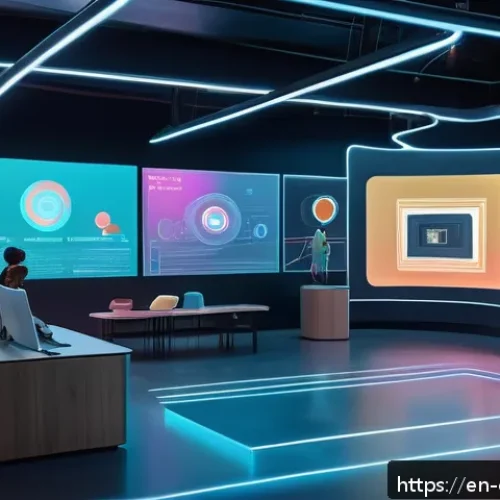
The screens we’ve been accustomed to for decades are giving way to something far more intimate and engaging: immersive reality. Designing characters for a traditional game or film is one thing, but crafting them for virtual reality (VR) or augmented reality (AR) is a whole new ballgame, and honestly, it’s exhilarating. When a user can literally stand next to your creation, walk around them, or even interact with them, the design challenges—and opportunities—skyrocket. I’ve had the privilege of experiencing some incredible VR character interactions, and the sense of “presence” is something truly unique. It changes how you think about scale, detail, and even emotional connection. It’s not just about looking good; it’s about feeling real enough to share your space with.
Crafting Presence: Designing for True Immersion
In VR and AR, your character isn’t just a figure on a screen; they are a part of the user’s personal space. This demands a different approach to detail and fidelity. Tiny nuances that might be missed on a 2D screen suddenly become incredibly important. Eye movements, subtle facial twitches, the way light plays off their clothing – these elements contribute massively to the feeling of presence. When I’m designing for VR, I think about how a user might inspect the character up close, looking at the stitching on their jacket or the texture of their skin. It’s about designing for a 360-degree scrutiny, ensuring that from every angle, the character holds up to the intense examination of someone who feels like they’re right there. The goal is to make the user forget they’re looking at pixels and truly believe they are interacting with another being.
Interactive Storytelling: When Characters React to You
Perhaps the most profound shift in designing characters for immersive experiences is the move towards truly interactive storytelling. No longer are characters passive observers or pre-scripted actors; they can respond to your gaze, your movements, and even your voice. Imagine a character in an AR experience making eye contact with you, or a VR character reacting to your physical gestures. This level of dynamic interaction opens up incredible possibilities for narrative depth and emotional engagement. It requires designers to think not just about how a character looks, but how they behave in response to an unpredictable human element. It’s about building complex AI personalities that can adapt and evolve, creating unique experiences for every user. For me, the thrill comes from knowing that each interaction is a unique, unrepeatable moment between the user and the character, forging a deeper, more personal connection.
The Smart Designer: AI and Machine Learning in Character Development
We’ve talked about AI helping with initial concepts, but its influence in character design stretches far beyond that first spark. AI and machine learning are increasingly becoming integral to the entire development pipeline, especially when we talk about customization, variation, and even optimizing performance. It’s no longer just a fancy tool; it’s becoming a foundational element that empowers artists and developers to achieve astonishing results with greater efficiency. I’ve seen how these intelligent systems can take a basic character model and generate an entire wardrobe of outfits, each perfectly fitted and styled. It’s a testament to how technology can augment human creativity, not diminish it, allowing us to focus on the truly artistic and narrative-driven aspects.
Personalizing the Experience: AI-Driven Customization
Think about the sheer variety of character customization options in modern video games or virtual worlds. Creating all those hairstyles, facial features, body types, and clothing choices manually would be a gargantuan task. This is where AI truly shines. Machine learning algorithms can analyze vast datasets of existing character assets and then generate endless unique combinations, offering players an unparalleled degree of personalization. I’ve spent hours in character creators powered by these systems, amazed at the sheer breadth of choices available. It’s not just about random generation; it’s about intelligent generation that adheres to stylistic consistency and anatomical correctness. This allows users to truly embody their ideal avatar, fostering a deeper connection to the digital world and the stories within it. It’s a win-win: artists save countless hours, and users get exactly the character they envision.

Future Forward: Generative Design and AI Ethics
The road ahead for AI in character design is incredibly exciting, with generative design pushing the boundaries of what’s possible. Imagine AI not just generating variations, but designing entirely new character archetypes, complete with backstories and personalities, based on a few prompts. We’re already seeing glimpses of this, and it opens up a world of possibilities for truly unique and diverse character universes. However, this also brings important ethical considerations to the forefront. How do we ensure fairness, avoid biases embedded in training data, and maintain creative control? These are conversations that are happening right now, and as designers, we need to be actively involved. It’s about harnessing this incredible power responsibly, ensuring that AI enhances human creativity and promotes inclusivity, rather than inadvertently limiting it. The future of character design isn’t just about technology; it’s about the thoughtful integration of that technology with human values.
The Artist’s Evolving Role: Navigating New Creative Horizons
With all these incredible digital advancements, it’s natural to wonder about the role of the artist. Is our craft being taken over by machines? Absolutely not! In my experience, it’s quite the opposite. These tools aren’t replacing artists; they’re empowering us to reach new heights of creativity, efficiency, and expressive capability. The landscape is shifting, certainly, but it’s a vibrant, fertile ground for innovation. The core principles of good design, strong storytelling, and emotional resonance remain paramount. What’s changed is the toolkit, and learning to wield these new instruments is what truly sets today’s character designers apart. It’s a continuous journey of learning and adapting, but one that promises an even richer creative output.
Mastering the New Toolkit: Skills for a Digital Renaissance
The skills required for a character designer today are broader and more interdisciplinary than ever before. While traditional art fundamentals like anatomy, color theory, and composition are still non-negotiable, adding proficiency in 3D sculpting software, understanding PBR texturing workflows, and even dabbling in AI prompt engineering can give you an incredible edge. It’s about becoming a polymath, someone who can bridge the gap between pure artistic vision and technical execution. I’ve found that embracing a learner’s mindset is crucial; the tools are constantly evolving, and staying curious and adaptable is key to thriving. It’s a renaissance of digital artistry, and those who learn to combine traditional craftsmanship with cutting-edge technology are the ones who will truly define the next generation of iconic characters. It’s a challenging but incredibly rewarding path, constantly pushing you to grow and explore.
Emotion at the Core: Why Human Storytelling Still Reigns Supreme
Despite all the technological wizardry, at the heart of every truly memorable character lies a compelling story and genuine emotion. No AI, however advanced, can replicate the nuanced understanding of the human condition, the lived experiences, and the empathetic connections that artists bring to their creations. Digital tools are incredible facilitators, but they are just that – tools. They amplify our ability to convey feelings, build worlds, and tell stories, but the soul of the character, their personality, their struggles, and their triumphs, still emanates from the human imagination. My strongest belief is that as technology advances, the human element, the unique spark of individual creativity and emotional intelligence, becomes even more precious and irreplaceable. We’re not just designing characters; we’re crafting experiences and narratives that resonate deep within the human heart, and that, my friends, will always be the ultimate goal.
Wrapping Things Up
And there you have it, folks! What a journey we’ve taken through the incredible evolution of digital character creation. From those early days of wrestling with a blank page to today’s dazzling array of AI co-pilots, sophisticated 3D sculpting tools, and truly immersive animation techniques, it’s clear that the world of character design is more vibrant and accessible than ever before. For me, personally, witnessing and being a part of this transformation has been nothing short of exhilarating. It’s a constant reminder that while the tools change, the heart of what we do remains the same: bringing compelling, emotional, and unforgettable characters to life. It’s about leveraging technology to tell stories that truly resonate, pushing creative boundaries, and constantly learning along the way. I hope you’ve felt the same spark of excitement that I feel every time I dive into a new project, knowing that the possibilities are truly endless.
Valuable Insights for Your Journey
1. Embrace Continuous Learning: The digital landscape is always shifting, with new software and techniques emerging constantly. Don’t shy away from tutorials, online courses, or even just experimenting in your preferred tools. I’ve found that dedicating even an hour a week to learning something new keeps my skills sharp and my creativity flowing. Staying curious is your best asset in this fast-paced industry.
2. Master the Fundamentals: While AI can generate concepts, and 3D software handles polygons, a deep understanding of anatomy, color theory, composition, and storytelling remains paramount. These foundational art skills are the bedrock upon which all digital mastery is built. I always go back to basics when I feel stuck, and it always helps reset my artistic compass.
3. Network and Collaborate: The creative community is a treasure trove of knowledge and inspiration. Connect with other artists online, join forums, attend virtual workshops, and don’t be afraid to share your work and ask for feedback. Some of my best breakthroughs have come from conversations with peers and mentors who offered fresh perspectives.
4. Prioritize Story and Emotion: Remember that technology is a tool to serve your narrative. No matter how technically impressive a character is, if they lack personality, purpose, or emotional depth, they won’t truly resonate. Always ask yourself: “What story does this character tell?” That human connection is what truly makes a design memorable.
5. Experiment Fearlessly: The beauty of digital tools is the undo button! Don’t be afraid to try wild ideas, push concepts to their limits, or experiment with styles outside your comfort zone. Some of my most unique character designs have come from moments where I just decided to “see what happens” without any preconceived notions.
Key Takeaways for Aspiring Character Designers
The journey of a character designer in this digital age is one of exhilarating innovation and endless creative potential. We’ve seen how AI acts as a powerful co-pilot, how advanced 3D modeling tools empower us to sculpt with unprecedented detail, and how animation and motion capture bring characters to vibrant life with authentic movements. Furthermore, designing for immersive VR/AR experiences demands a heightened sense of presence and interactivity, pushing the boundaries of what a character can be. While technology provides astonishing new avenues, the core of character design remains rooted in human experience, emotional storytelling, and artistic vision. It’s about adapting to new toolkits, embracing a continuous learning mindset, and, most importantly, never losing sight of the human spark that makes a character truly unforgettable. As artists, our role isn’t diminished; it’s amplified, allowing us to craft deeper, richer, and more compelling narratives than ever before.
Frequently Asked Questions (FAQ) 📖
Q: So, what’s the biggest game-changer you’ve seen in character design with all this digital tech popping up?
A: Oh, that’s a fantastic question, and honestly, if I had to pick just one “biggest game-changer,” it would absolutely be Artificial Intelligence. I’ve personally witnessed how AI isn’t just a fancy buzzword; it’s genuinely transforming the early stages of character creation.
Think about it: brainstorming initial concepts used to involve countless hours of sketching, mood boarding, and refining. Now, with AI tools, you can generate a whole spectrum of ideas in minutes, exploring different styles, aesthetics, and even emotions with incredible speed.
It’s like having an impossibly fast assistant who can sketch a thousand ideas while you sip your coffee. My take on it? It doesn’t replace the artist’s vision, not at all!
Instead, it frees us up from the mundane, allowing us to focus on the truly creative, nuanced parts of design—the parts that make a character feel alive.
It’s about leveraging technology to push our human creativity further, not to replace it.
Q: Beyond just
A: I, what other digital tools are really shaking things up for character artists right now? A2: You’re right to look beyond just AI, because while it’s a huge piece of the puzzle, there’s so much more!
From my own experience diving deep into these tools, I’d say 3D modeling, photogrammetry, and even immersive VR/AR environments are absolutely revolutionizing the field.
3D modeling software, like ZBrush or Blender, has become so intuitive and powerful that creating incredibly detailed, high-fidelity characters is more accessible than ever before.
We can sculpt every wrinkle, every texture, giving characters a tangible presence. And photogrammetry? That’s pure magic!
Imagine scanning real-world objects or even people and bringing them into your digital canvas with astonishing realism. It cuts down on modeling time dramatically while boosting authenticity.
Then there’s VR and AR. I’ve been experimenting with designing characters directly in a virtual space, walking around them, seeing them in 3D as I sculpt.
It gives you an entirely new perspective on proportions, scale, and how a character will actually “feel” in a space. These tools aren’t just making things easier; they’re enabling us to create characters that are richer, more detailed, and profoundly more immersive.
Q: With all these incredible advancements, what does the future hold for character designers?
A: re our traditional skills still relevant? A3: This is a question I hear a lot, and it’s a valid one! My honest answer, based on everything I’m seeing and experiencing, is that our traditional skills are more relevant than ever, but the application of them is evolving.
Think of it this way: a chef still needs to understand flavors and cooking techniques, even with a fancy new oven. Similarly, character designers still need a deep understanding of anatomy, storytelling, emotion, color theory, and visual communication.
These are the timeless foundations. What’s changing is that we now have an incredible arsenal of digital tools at our fingertips to bring those skills to life in previously unimaginable ways.
The future, as I see it, isn’t about becoming a “robot artist” but rather a “tech-savvy storyteller.” We’ll need to be adaptable, always learning about the latest software, and incredibly curious about how to harness new tech to tell even more compelling stories.
The human element—that unique spark of creativity, empathy, and the desire to connect through narrative—that’s the irreplaceable core of what we do. So yes, your traditional skills are absolutely vital; they’re the soul we pour into the digital form.